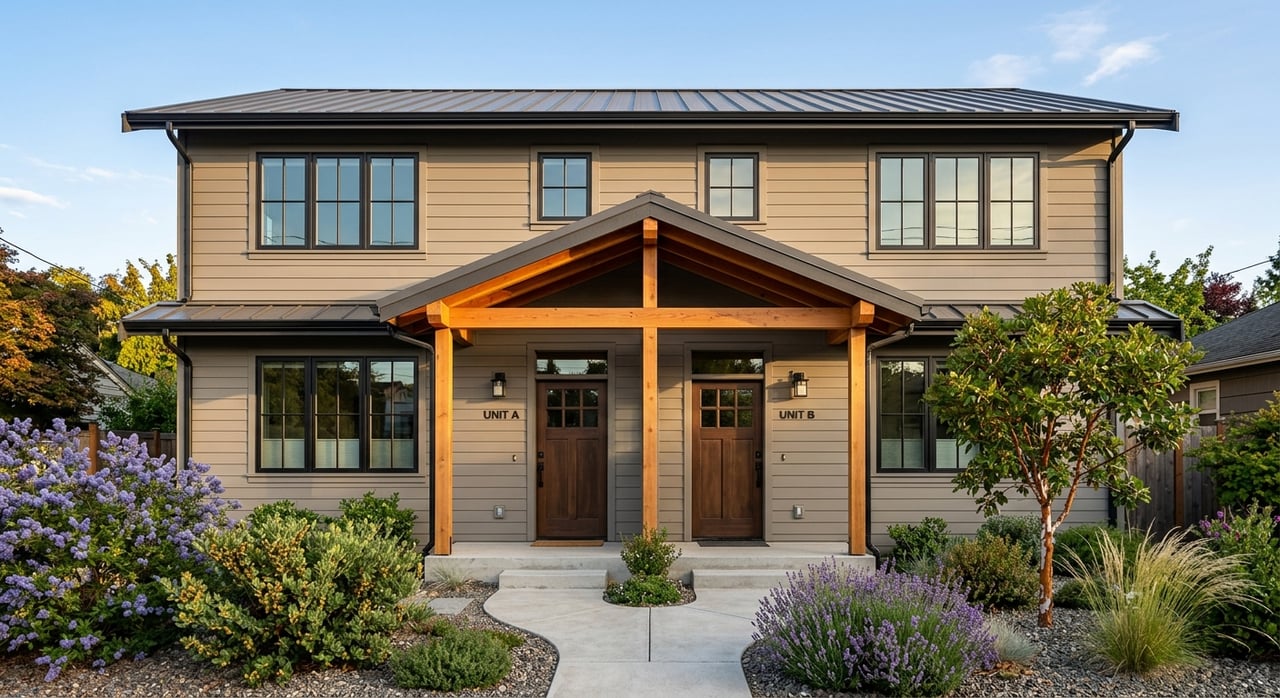
If you have been thinking about buying a duplex or small multi-family property in Redding, you are not alone. These properties can offer a path to rental income, a way to offset your housing costs, or a chance to grow a small portfolio in a market where many listings are still relatively modest in size. The key is knowing how to read the numbers, spot the right updates, and understand the California rules that can affect your return. Let’s dive in.
Why Redding draws small multi-family buyers
Redding offers a mix that catches the attention of many investors and owner-occupants. Compared with larger California markets, the entry point for duplexes, triplexes, and fourplexes can still feel approachable, even though supply is limited.
Current active multifamily inventory in Redding is thin. Redfin shows 14 active multifamily listings in the city, with a median asking price of about $559,000, while the broader Redding housing market had a median sale price of $416,000 in March 2026. That gap helps explain why buyers need to look closely at income potential, condition, and unit count instead of comparing these properties to single-family homes alone.
What small multi-family costs in Redding
The local price spread is wide, and that matters. A downtown two-unit property is listed around $329,900, while a fourplex may sit in the $559,000 to $595,000 range, and larger multi-unit properties climb much higher.
That range shows a simple truth about investing in duplexes and small multi-family in Redding: price is tied to more than just location. Rent potential, building condition, number of units, and the ease of future management can all move the value up or down.
Current price examples
Here is what the current market snapshot shows:
- Downtown Redding has one active multifamily listing at about $330,000
- Central Redding shows three active listings with a median around $364,000
- East Redding shows five active listings with a median around $559,000
- An East Redding 8-unit property is listed around $850,000
- An East Redding 9-plex is listed around $1.3 million
- A 38-unit property is listed around $4 million
For most buyers looking at duplexes through fourplexes, the sweet spot is usually the smaller end of that range. This is where owner-occupants, first-time investors, and local buyers often focus.
Where you will find these properties
Most current activity appears to cluster in the city core and nearby corridors. Based on active listings, multifamily properties are showing up in Central Redding, Downtown Redding, East Redding, West Redding, North Redding, Happy Valley, Boulder Creek, Enterprise, Quartz Hill, Buckeye, and South Redding.
Looking at current listing patterns, the visible inventory appears to cluster most in the 96001 core and the east-side 96002 and 96003 corridors. This is based on active listing addresses, not a formal neighborhood map, but it gives you a useful starting point when planning your search.
What the housing stock looks like
Redding’s small multi-family market leans older. Current examples include a 1946 downtown property, a 1977 East Redding 9-plex, and a 1994 West Redding tri-plex.
That older stock creates both opportunity and risk. You may find a lower entry price, but you also need to pay close attention to roofs, windows, electrical systems, plumbing, HVAC, and whether important upgrades have already been completed.
What rents look like in Redding
The rent picture in Redding supports investor interest, but it also calls for realistic underwriting. Current 2-bedroom asking rents run from about $1,229 to $2,150 on Zillow, while Apartments.com shows an average 2-bedroom rent of $1,372 in Redding.
On duplex-specific examples, current listings show a 1-bedroom duplex at $1,350 and a 2-bedroom duplex at $1,650. That suggests many basic duplex underwriting assumptions will land somewhere in the mid-$1,000s per unit unless the property has recent upgrades or stands out in condition and layout.
Simple duplex math
If you use the city average of $1,372 for two 2-bedroom units, that produces about $32,928 in annual gross income. On a $559,000 purchase, that works out to roughly a 5.9% gross yield.
If those same two units rented for $1,650 each, annual gross income would rise to $39,600. That would push the gross yield to about 7.1% on the same purchase price.
These are gross figures only. They do not include vacancy, taxes, insurance, repairs, property management, or financing costs, which is why careful analysis matters so much.
Why fourplexes can look stronger on paper
Some current value-add listings show better gross income potential than basic duplex examples. A listed $595,000 fourplex with stated annual gross income of $54,540 works out to about a 9.2% gross yield, while a West Redding tri-plex at $418,347 with annual gross income over $29,000 pencils to about 6.9% gross.
That does not automatically make every fourplex the better buy. It simply shows why unit count and in-place rent can make a major difference when you compare one property to another.
Gross yield is only a starting point
A higher gross yield can look great at first glance, but older buildings often come with more maintenance exposure. If a property needs a roof, electrical work, plumbing updates, or turnover repairs, those costs can change the picture quickly.
In Redding, many of the better opportunities may be the ones where the property has enough in-place income and enough price discount to absorb future repairs, vacancy, and financing pressure. That is especially true in a market where older value-add stock makes up a large share of the available inventory.
What to check before you buy
When you are comparing duplexes and small multi-family properties in Redding, a short checklist can keep you focused. The goal is not just to find a property that looks good online. It is to find one that still makes sense after you verify the details.
Key due diligence items
- Verify the rent roll against current market rent
- Review tenant stability and lease terms
- Check roof age and visible roof condition
- Inspect HVAC, electrical, and plumbing systems
- Look at windows, laundry setup, and parking
- Confirm which updates were completed and when
- Review whether the property may be covered by AB 1482 or an exemption
Several current listings already highlight updates like newer roofs, windows, electrical improvements, mini-splits, attached garages, fenced yards, and in-unit laundry. Those features can matter a lot when you compare two older properties at similar price points.
How California rules affect your strategy
If you are investing in small multi-family in Redding, California’s Tenant Protection Act, also called AB 1482, should be on your radar. The law generally caps rent increases at 5% plus CPI, or 10%, whichever is lower, during any 12-month period.
California Courts also explain that just-cause protections usually apply after 12 months of lawful occupancy. In practical terms, that means you should understand both the current rent structure and the tenant timeline before you assume you can make quick changes after closing.
When initial rent can reset
The law allows an owner to set the initial rent on a new tenancy. That means turnover is often the main point when a unit can be reset to market rent.
For investors, this makes vacancy patterns and lease rollover timing important parts of the analysis. A property with below-market rents may still be attractive, but only if your timeline and budget match the reality of how rent adjustments can happen.
Important AB 1482 exemptions
Some properties may be exempt from parts of AB 1482. According to the California bill text, exemptions can include housing with a certificate of occupancy issued within the previous 15 years and a duplex where the owner occupied one unit at the start of the tenancy and continues to occupy it.
That second point matters for first-time investors and house hackers. An owner-occupied duplex can offer a very different operating picture than a fully tenant-occupied investment property, so this is worth confirming early in the process.
Older buildings need extra care
Because much of Redding’s small multi-family stock is older, age-related issues should never be treated as minor details. Pre-1978 housing is more likely to contain lead-based paint, and buyers and renters of most pre-1978 housing have disclosure rights before signing.
If renovation work disturbs lead paint in pre-1978 housing, lead-safe rules apply. This is one more reason to budget carefully before taking on a heavy value-add project.
Repairs and tenant planning
California Courts note that major repairs or major remodels can qualify as no-fault just-cause reasons in some situations. Those notices can also trigger relocation assistance or a last-month-rent waiver.
For you as a buyer, that means renovation plans should be reviewed with care before you build your numbers around fast unit turnover or major construction work. A property that looks simple on paper can become more complex once tenant occupancy and repair timing are part of the plan.
Best fit for your goals
The right property depends on what you want out of the purchase. If your goal is lower entry cost and a chance to improve cash flow over time, an older duplex or triplex in a core Redding area may deserve a close look.
If your goal is simpler management, a stronger in-place rent roll, and fewer near-term repairs, a more updated fourplex or small apartment property may be a better fit, even at a higher price. In this market, the tradeoff is often clear: lower upfront cost versus easier day-to-day ownership.
Why local guidance matters
In a market with limited inventory and wide variation from one property to the next, local context matters. Two properties with the same unit count can have very different value depending on location, updates, layout, parking, laundry, and current tenancy.
That is where experienced local guidance can save you time and help you avoid expensive assumptions. Whether you are buying your first duplex, looking for a value-add fourplex, or comparing income property options across Redding and Shasta County, having a clear read on the numbers and the local housing stock can make your next move much more confident.
If you are considering investing in duplexes or small multi-family in Redding, a local, no-pressure conversation can help you narrow down what fits your budget and goals. Reach out to Dustin Foster to talk through current opportunities, market conditions, and what to watch for before you buy.
FAQs
What do duplexes and small multi-family properties cost in Redding?
- Current active multifamily listings in Redding show a median asking price of about $559,000, with smaller properties starting around $329,900 and larger multi-unit properties priced much higher.
What are typical rents for 2-bedroom units in Redding?
- Current 2-bedroom asking rents in Redding range from about $1,229 to $2,150, with an average around $1,372 based on the research snapshot.
What areas of Redding have small multi-family listings?
- Current listing activity shows multifamily properties in areas including Downtown Redding, Central Redding, East Redding, West Redding, North Redding, Enterprise, South Redding, and nearby corridors.
What should you inspect when buying a Redding fourplex or duplex?
- Focus on the rent roll, tenant stability, roof age, HVAC, electrical, plumbing, windows, parking, laundry, and whether recent upgrades have already been completed.
How does AB 1482 affect Redding multi-family investing?
- AB 1482 generally limits rent increases to 5% plus CPI, or 10%, whichever is lower, within a 12-month period, and just-cause protections usually apply after 12 months of lawful occupancy.
Are owner-occupied duplexes treated differently under AB 1482 in California?
- Yes. The bill text includes an exemption for a duplex where the owner occupied one unit at the start of the tenancy and continues to occupy it, which can make owner-occupant purchases especially relevant for first-time investors.