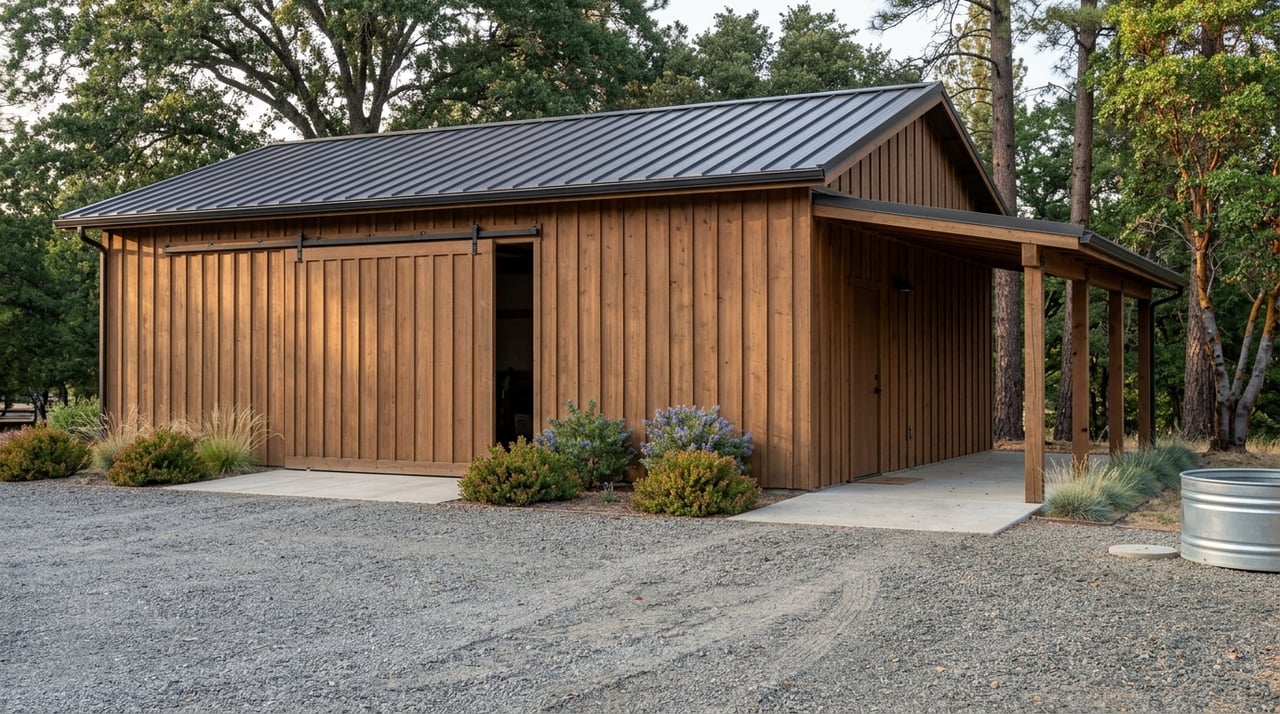
Dreaming about a few acres, room for horses, and a little more breathing space in Cottonwood? It is an exciting move, but rural property shopping comes with a different set of questions than buying a home in a typical subdivision. If you want to avoid expensive surprises, you need to look past the acreage number and focus on what the land can actually support. Let’s dive in.
Why acreage alone is not enough
A common mistake is assuming that a larger parcel is automatically suitable for horses. In Cottonwood, that is not always true because permitted uses depend on the specific parcel, its zoning, and county rules.
Cottonwood is an unincorporated community in Tehama County. That means parcel questions usually run through county departments like Planning, Building and Safety, Environmental Health, and Code Enforcement instead of a city office. If you are considering horse use, barns, wells, septic, or additional structures, the details are highly parcel-specific.
Check zoning before you fall in love
Tehama County separates land into residential and agricultural categories. Residential districts include RE, R-1, R-2, R-3, R-4, and PD, while agricultural land use designations include Upland Agriculture, Valley Floor Agriculture, and Timber.
That matters because acreage does not automatically equal horse-ready use. Residential lot sizes can be much smaller than agricultural minimums, and Tehama County Planning specifically advises buyers to confirm allowed uses, setbacks, minimum lot size, building height, and parking by APN or address.
Agricultural land has its own rules
The county’s general plan shows that agricultural designations often come with large minimum parcel sizes. Upland Agriculture is set at 160 acres, while Valley Floor Agriculture is 40 acres on Williamson Act contracted land and 20 acres on non-contract land. In Valley Floor Agriculture-El Camino, some non-contract land can be 5 acres.
These designations are intended for uses like grazing and other agricultural activity, but they still do not replace parcel-specific verification. Some agricultural areas are also described as suitable for small-farm or hobby-farm production with limited keeping and grazing of animals.
Residential land can be smaller
The county housing element lists minimum lot sizes of 10,500 square feet in RE and 5,000 square feet in R-1. That is a good reminder that a listing with a residential parcel, even one that feels roomy, may not work the way you expect for horses or related improvements.
Before you budget for fencing, stalls, or a tack room, confirm the zoning district and permitted uses first. That one step can save you time, money, and frustration.
Wells and septic can make or break the deal
For many Cottonwood acreage properties, the real decision point is not the view or the fence line. It is water and wastewater.
Tehama County Environmental Health regulates individual sewage disposal systems, domestic wells, public water systems, and land development issues. If a parcel relies on a private well and septic system, you should treat those items as top-priority due diligence.
Septic feasibility matters early
Tehama County’s Local Agency Management Program says the county has a one-acre minimum for new parcels served by an onsite wastewater treatment system. Environmental Health reviews soil-test data and typically performs a site visit before issuing a permit.
Older parcels can need additional review. The county states that parcels created before 1982 must have soils tests to determine suitability for wastewater dispersal, and a new house permit package includes an SFR modified soils test.
If you are buying vacant land or planning to add improvements, ask whether the parcel already has an approved reserve area, prior soil testing, or an existing OWTS permit history. Without that information, it is hard to know what your true building path looks like.
Well questions are just as important
Tehama County’s Groundwater Sustainability Agency requires county-wide well registration and has adopted regulations for new and replacement wells. The GSA says the annual registration fee is $0.29 per acre for each legal parcel.
On a rural property, you will want to ask for well registration status, available well information, and any dry-well history. County-linked drought resources also point buyers toward domestic well reporting and water delivery support, which is why well yield, water quality, and drought history deserve careful attention.
Improvements deserve a closer look
When you buy horse property, you are not just buying land. You are often buying fences, barns, sheds, pads, access routes, pens, utility connections, and other improvements that can affect both value and usability.
That is why permit history matters. In unincorporated Tehama County, Planning and Building and Safety enforce zoning and building code, so it is wise to verify existing improvements instead of relying only on what is visible during a showing.
Barns and ag-exempt buildings
Tehama County does allow an agricultural exemption for certain non-habitable agricultural buildings on parcels of one acre or more, but the exemption is narrow. The structure must be at least 20 feet from property lines and 23 feet from dwellings.
On parcels from 1 to 10 acres, the exemption is capped at 600 square feet and 15 feet high. On parcels over 10 acres, it can go up to 12,000 square feet and 25 feet high.
The county also says this exemption does not apply to covered riding arenas or commercial stables. Electrical and plumbing work still require normal approvals.
New construction needs planning
County permit guidance says new construction starts with a plot plan. A house permit application may include an approved plot plan, building plans, energy calculations, truss calculations, an SFR modified soils test, and other supporting documents.
If you are buying with plans to add a shop, barn, or home later, ask early what has already been approved and what still needs review. That can change your timeline and budget in a big way.
Fire planning is part of rural ownership
Fire readiness is not optional on rural property in Tehama County. It is part of normal ownership, budgeting, and long-term maintenance.
The county fire department provides defensible-space resources, and CAL FIRE states that 100 feet of defensible space is required by law. Tehama County also notes that large sections of the unincorporated county are located in Very High Fire Hazard Severity Zones.
Verify fire-zone status by parcel
If a property is in a State Responsibility Area or Wildland-Urban Interface area, new construction may require fire-resistive features. The county’s WUI guidance references features such as non-combustible roofs, gutters and downspouts, enclosed eaves, non-combustible exterior walls, tempered glass, and non-combustible deck materials.
Before you estimate insurance costs or clearing expenses, confirm the parcel’s fire-zone status and defensible-space expectations. This is one of the most important steps in evaluating the true cost of ownership.
What Cottonwood pricing looks like now
Current Cottonwood listings show a wide range in both land and horse-property pricing. That range is a good reminder that value is shaped by more than acreage alone.
Redfin currently shows 119 land homes for sale in Cottonwood with a median listing price of $457,000. Zillow land listings show small lots around $15,000 to $24,500, 1 to 5 acre parcels around $29,500 to $60,000, a 7-acre parcel at $179,900, a 10.62-acre parcel at $93,500, a 13.77-acre parcel at $53,800, and a 40-acre parcel at $110,000.
Realtor.com horse-property search results show examples ranging from $315,000 for a 3-bedroom, 2-bath home on 0.25 acre to $1,499,000 for a pending 4-bedroom home on 10.44 acres. Other search results include listings around $398,000 and $419,000 on sub-acre lots.
What the pricing spread tells you
Based on the current listings, parcel size is only one piece of the puzzle. Water, usable ground, access, fencing, improvements, and house condition all appear to influence pricing in a meaningful way.
That is why two properties with similar acreage can feel very different in value. One may be closer to move-in ready for your goals, while another may need substantial work before it functions the way you want.
A smart buyer checklist
If you are shopping for acreage or horse property in Cottonwood, keep your due diligence focused on the items that affect use, cost, and future flexibility.
- Confirm the APN, zoning district, and allowed uses with Tehama County Planning.
- Ask for well information, well registration status, and any dry-well history.
- Verify septic feasibility, soil-test history, and whether there is an approved reserve area or OWTS permit.
- Check permit history on barns, sheds, fencing, and other outbuildings.
- Confirm fire-zone status and defensible-space expectations before finalizing your budget.
Why local guidance helps
Buying rural property is different from buying a standard neighborhood home. You are not only evaluating bedrooms and square footage. You are also looking at use rights, water, septic, fire readiness, and improvement history.
That is where experienced local guidance can make the process a lot smoother. When you have a clear plan and the right questions, you can move forward with more confidence and avoid buying a property that does not fit your goals.
If you are thinking about buying acreage or horse property in Cottonwood, Dustin Foster can help you sort through the details, compare options, and make a confident move with no pressure.
FAQs
What should you verify before buying horse property in Cottonwood?
- You should verify the APN, zoning, allowed uses, well details, septic feasibility, permit history for improvements, and fire-zone status before treating a property as horse-ready.
Does acreage automatically allow horses in Cottonwood?
- No. In unincorporated Tehama County, horse use depends on the parcel’s zoning, allowed uses, setbacks, and other county requirements, not just the number of acres.
Why are wells and septic so important for Cottonwood acreage?
- Many rural properties depend on private well and onsite wastewater systems, so water availability, well registration, soil testing, and septic suitability can strongly affect whether the property works for your plans.
Do barns and outbuildings in Cottonwood need permits?
- Some non-habitable agricultural buildings may qualify for a limited county exemption, but the rules are narrow, and electrical or plumbing work still requires normal approvals.
How much defensible space is required for rural property in Tehama County?
- CAL FIRE states that 100 feet of defensible space is required by law, and some parcels may also face additional fire-related construction and maintenance considerations depending on location.